Why Pet-Care Games Help Kids Learn Better
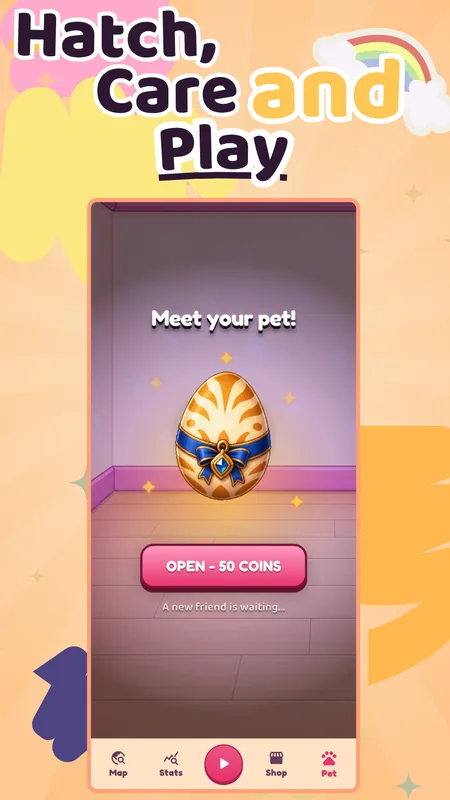
Ask a 5-year-old why they want to open their learning app, and they'll probably say something like: "I need to check on my pet." That answer — simple and sincere — reveals something important about how children learn and what keeps them coming back.
Pet-care mechanics in educational apps aren't just a gimmick. They tap into well-established principles from developmental psychology and behavioral science. Here's why they work — and why they work particularly well for children ages 3–10.
The Core Principle: Meaningful Rewards
Not all rewards are equal. A gold star at the end of a worksheet provides momentary satisfaction, but it doesn't create a reason to return tomorrow. A digital pet that needs feeding, playing, and care creates ongoing responsibility — and ongoing motivation.
The difference is what psychologists call intrinsic meaning. Children don't just want points. They want to feel that what they do matters to something or someone — even a fictional one. A hungry pet creates genuine emotional investment in the outcome of learning.
The Learning Loop That Digital Pets Create
This loop is self-reinforcing. Each cycle strengthens the habit and the emotional connection. Over weeks, "playing the learning app" becomes a natural part of the child's daily routine — not because a parent insisted, but because the pet is waiting.
Why This Works for Ages 3–10 Specifically
1. Emotional attachment develops early
Children in this age range are in a critical period for social and emotional development. They form strong attachments not just to people, but to objects, characters, and creatures — real or digital. A child who names their pet and worries about whether it's hungry has formed a genuine emotional bond. That bond is a powerful motivator.
2. Nurturing play is developmentally natural
Children ages 3–10 engage heavily in nurturing play: feeding stuffed animals, putting dolls to sleep, "taking care" of toy creatures. Digital pet mechanics mirror this natural behavior, making the app feel familiar and emotionally resonant rather than foreign and academic.
3. Delayed gratification develops gradually
One of the most valuable things a pet-care loop teaches, almost invisibly, is delayed gratification. A child who learns "I have to do three learning games to earn enough coins to buy my pet a treat" is practicing one of the most important executive function skills — without any explicit instruction.
4. The stakes feel real but consequences are gentle
If a child forgets to feed their pet for a day, the pet gets hungry — but recovers quickly once cared for. This models real-world cause and effect without real-world consequences. Children learn responsibility, empathy, and routine in a forgiving environment.
What Makes a Good Pet-Care Learning System
Not all pet mechanics are created equal. The best ones share these characteristics:
- The pet's needs are connected to learning output — coins come from completing educational games, not from just tapping the screen
- Pet care is varied and meaningful — food, water, medicine, play, sleep, decoration create a rich nurturing experience
- The pet responds visibly — children need to see their care reflected in the pet's happiness and behavior
- The loop is daily, not weekly — pets that need care every day create daily app habits
- The pet doesn't punish the child — missed days should mean a hungry pet that recovers, not a dead pet or lost progress
The Coin Economy: Teaching More Than Learning
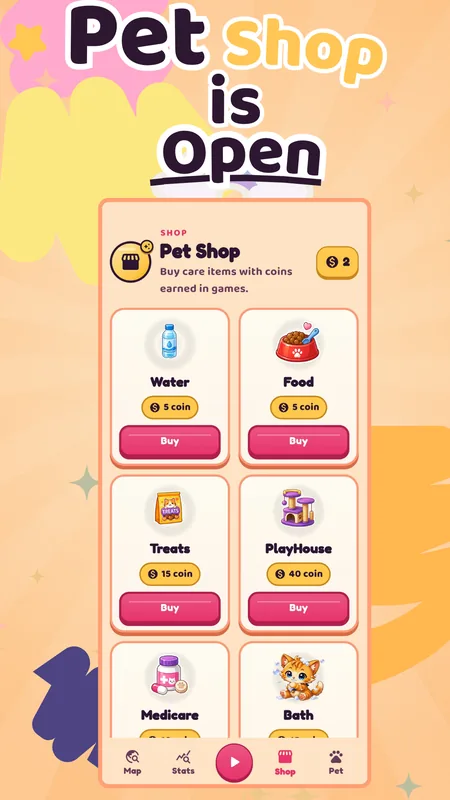
When a child earns coins through learning and then decides how to spend them — food now, or save for a room decoration — they're practicing real economic thinking. What do I need most? What can wait? Is this worth the cost?
These micro-decisions add up over hundreds of play sessions into genuine numeracy intuition, planning skills, and value judgement. A child who has run a pet shop economy for three months has a richer sense of numbers, exchange, and consequence than many worksheets could provide.
What Parents Often Notice
Parents who use pet-care learning apps with their children consistently report the same observations:
- Children open the app without being asked
- Children are upset if screen time ends before they've cared for their pet
- Children talk about their pet — its name, what it likes, what it needs
- Children are motivated to do "one more game" to earn coins
- Children show the pet to siblings, grandparents, and friends
Each of these behaviors is evidence that the emotional engagement is real — and that real engagement is driving real learning.
The Bottom Line
Pet-care mechanics work in learning apps because they convert a solitary educational activity into an ongoing relationship. Children don't just open an app — they return to a living system that needs them. That emotional need creates habit, and habit creates the daily practice that produces genuine learning gains over time.
For parents looking for educational screen time that actually sticks, a pet-care learning loop is one of the most well-designed motivation systems available for the 3–10 age range.
Frequently Asked Questions
Meet PIXEL-LEARN's Pet System
Hatch a pet, earn coins through learning, and care for your pet every day. 500+ learning levels, voice guidance, parent progress — free on Google Play.
Download PIXEL-LEARN Free